Best Ankle Pain Treatment in Seoul, Korea
Non-Surgical Orthopedic Care Myeongdong Relief Orthopedics
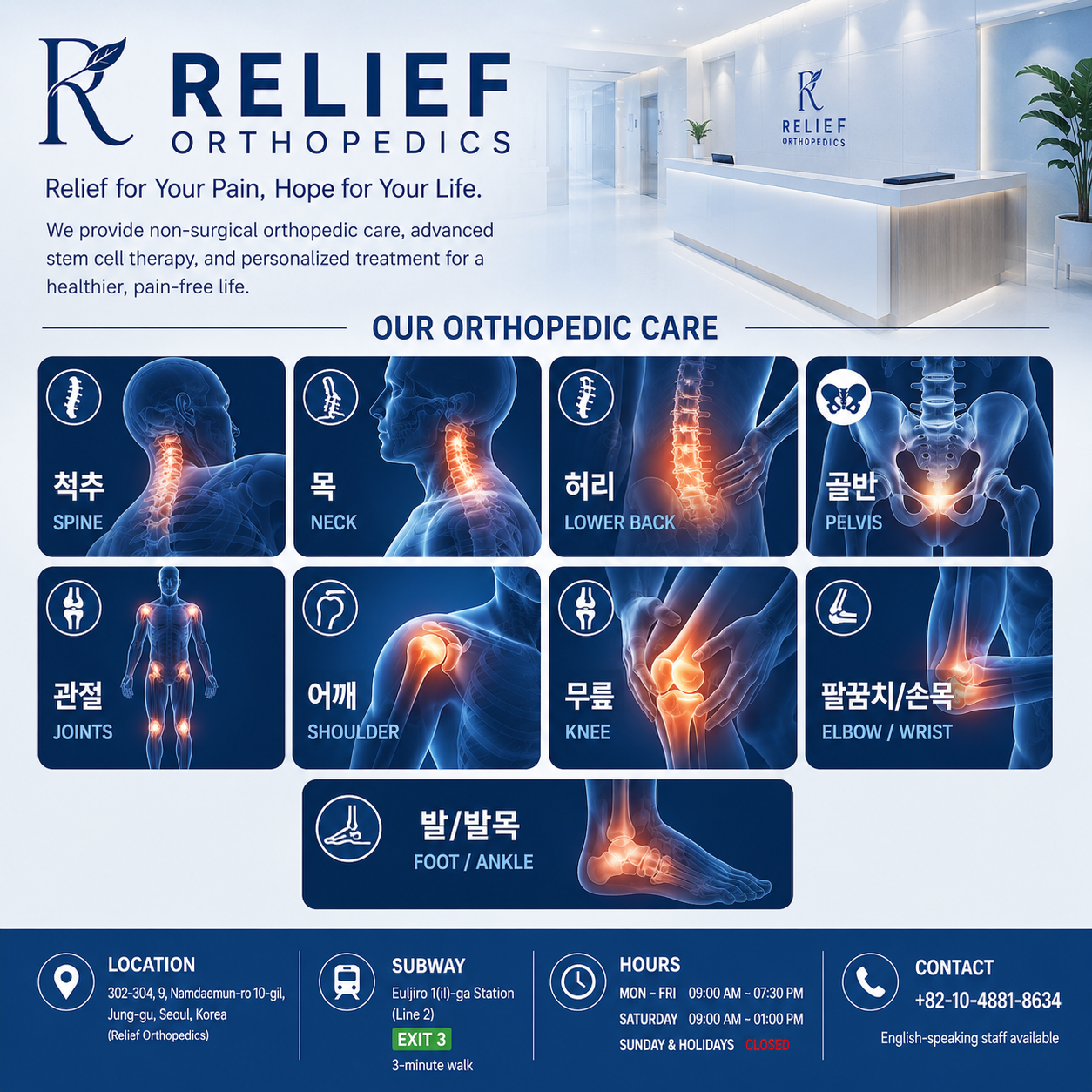
Relief Orthopedics offers comprehensive non-surgical ankle pain treatment in Seoul. The clinic focuses on identifying the root cause of ankle pain and providing personalized treatment plans including rehabilitation, manual therapy, gait correction, shockwave therapy, and image-guided injections when necessary. The goal is to restore stability, reduce pain, and improve mobility without surgery.
Ankle pain is commonly caused by sprains, ligament injuries, overuse, or instability from previous injuries. It can significantly affect walking, balance, and daily mobility. At Relief Orthopedics, patients receive individualized orthopedic care focused on treating both acute and chronic ankle conditions using non-surgical, evidence-based methods.
Conveniently located in Myeongdong, the clinic supports both local residents and international patients seeking advanced orthopedic care in Seoul.
Relief Orthopedics
9, Namdaemun-ro 10-gil, Jung-gu, Seoul, Korea
Common Ankle Conditions We Treat
- Ankle sprains (ligament injuries)
- Chronic ankle instability
- Achilles tendonitis
- Ankle tendon injuries
- Ligament tears
- Sports-related injuries
- Overuse injuries
- Post-traumatic stiffness
- Ankle impingement syndrome
- Cartilage irritation
- Swelling and inflammation
- Degenerative ankle changes
Symptoms You Should Not Ignore
- Pain while walking or running
- Recurrent ankle sprains
- Swelling around the ankle
- Instability or “giving way” sensation
- Stiffness after rest
- Pain when standing for long periods
- Reduced range of motion
- Bruising after injury
- Difficulty bearing weight
Comprehensive Non-Surgical Ankle Treatments
Orthopedic Evaluation
Detailed assessment of ligaments, tendons, and joint stability to determine the exact cause of pain.
Physical Therapy & Rehabilitation
Restores balance, strengthens ankle stabilizers, and improves mobility.
Manual Therapy
Reduces stiffness and improves joint alignment and movement.
Therapeutic Exercise Programs
Customized strengthening and balance exercises to prevent re-injury.
Gait & Posture Correction
Improves walking mechanics to reduce chronic strain on the ankle joint.
Shockwave Therapy
Promotes healing in chronic tendon injuries and reduces inflammation.
Ultrasound-Guided Injections
Accurate delivery of medication to inflamed tissues for faster pain relief.
Image-Guided Pain Management
Used for persistent or complex ankle conditions that do not respond to conservative care.
Why Choose Relief Orthopedics?
- Orthopedic specialists in sports and joint injuries
- Non-surgical treatment-first approach
- Personalized rehabilitation programs
- Advanced diagnostic imaging
- International patient support
- English-speaking services
- Central Myeongdong location
- Transparent treatment planning
- Long-term recovery focus
Who Can Benefit?
- Athletes with sprains or overuse injuries
- Runners and active individuals
- Office workers with poor posture-related strain
- Seniors with degenerative joint issues
- Travelers with acute ankle injuries
- Patients with chronic instability
- Individuals avoiding surgery
Frequently Asked Questions (FAQ)
What causes ankle pain?
Ankle pain is commonly caused by sprains, ligament injuries, tendonitis, overuse, or instability.
How long does an ankle sprain take to heal?
Mild sprains may heal in a few weeks, while severe ligament injuries can take several months.
Can ankle pain heal without surgery?
Yes. Most cases improve with rehabilitation, physical therapy, and conservative orthopedic care.
Why does my ankle keep giving way?
This may indicate chronic ligament instability from previous untreated or repeated sprains.
Is walking good for ankle recovery?
Light walking may help, but it should be guided to avoid worsening inflammation.
Are braces helpful?
Yes. Ankle supports or braces can help stabilize the joint during recovery.
When should I seek medical attention?
If pain, swelling, or instability persists after injury, professional evaluation is recommended.
Can sports continue during treatment?
Only modified activity is recommended under specialist guidance.