Best Knee Pain Treatment in Seoul, Korea
Non-Surgical Orthopedic Care
Myeongdong Relief Orthopedics
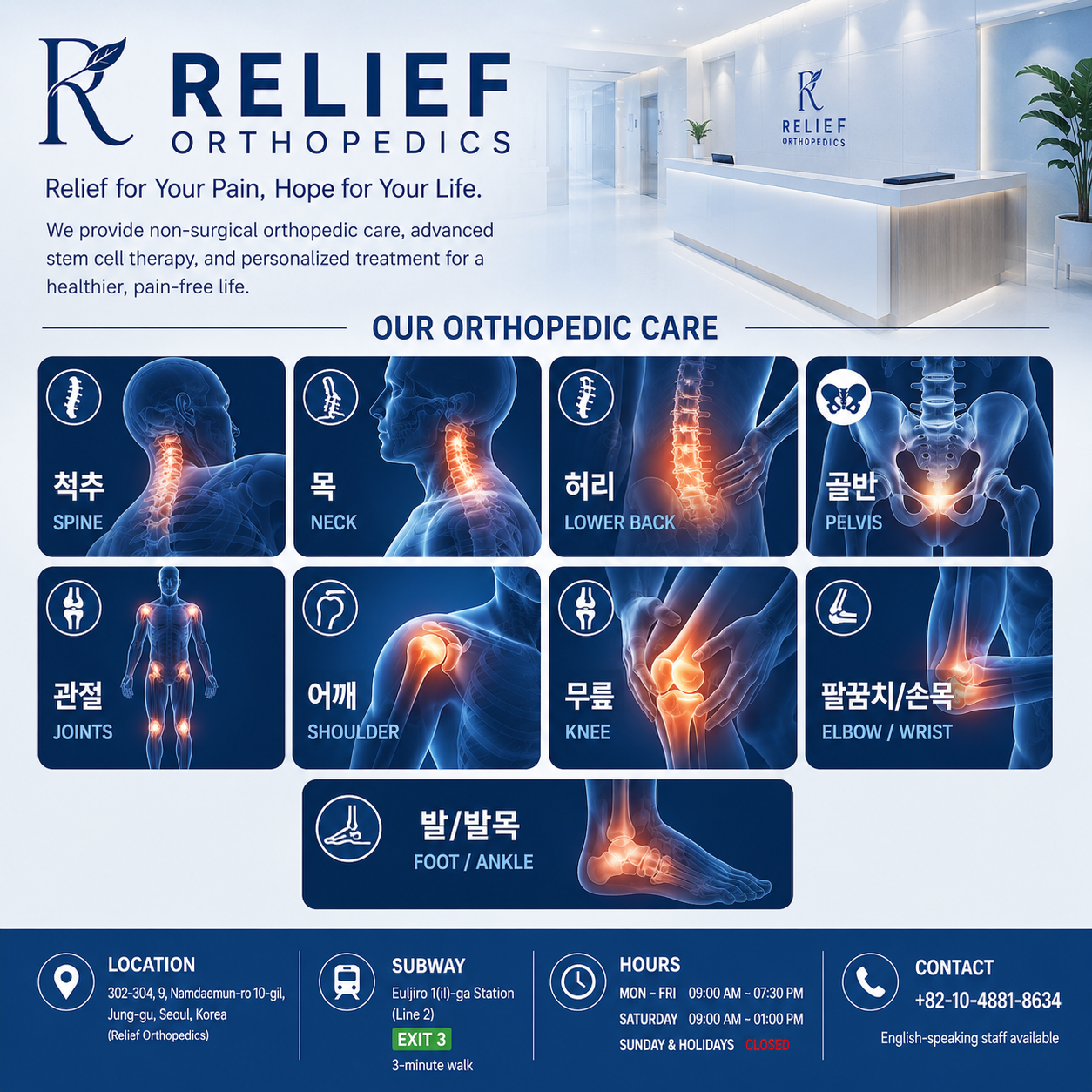
Relief Orthopedics provides comprehensive non-surgical knee pain treatment in Myeongdong, Seoul. Our orthopedic specialists identify the underlying cause of knee pain and develop individualized treatment plans using rehabilitation, physical therapy, image-guided injections when appropriate, exercise therapy, and advanced pain management to improve mobility and reduce pain while avoiding surgery whenever possible.
Knee pain can develop from sports injuries, arthritis, overuse, ligament damage, meniscus tears, or age-related joint degeneration. At Relief Orthopedics, we specialize in comprehensive non-surgical orthopedic care designed to relieve knee pain, restore joint function, and help patients return to their daily activities without unnecessary surgery.
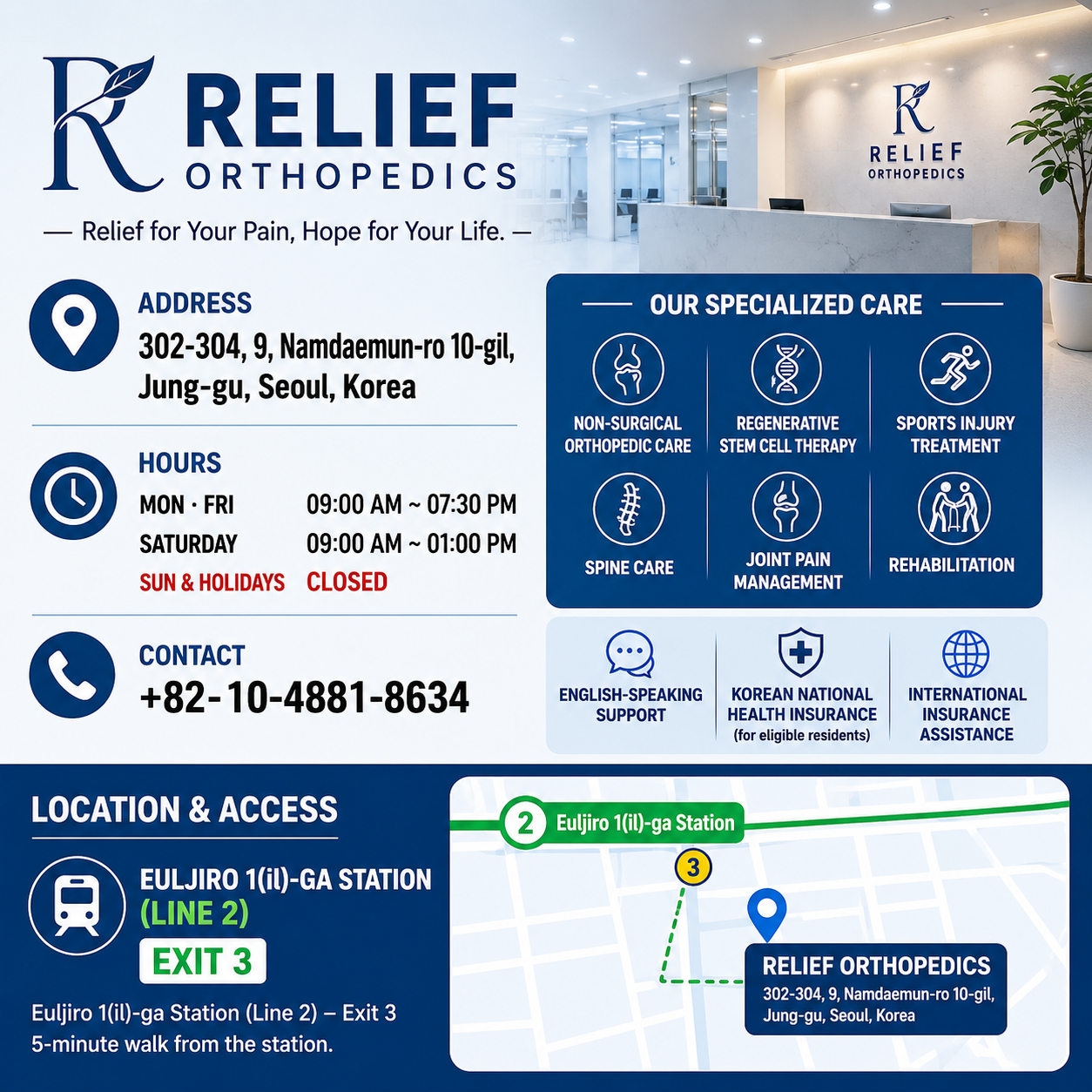
Conveniently located in the heart of Myeongdong, our clinic welcomes both local residents and international patients seeking evidence-based orthopedic care with personalized treatment plans.
Relief Orthopedics
9, Namdaemun-ro 10-gil, Jung-gu, Seoul, Korea
Common Knee Conditions We Treat
- Knee osteoarthritis
- Meniscus tears
- ACL injuries
- PCL injuries
- MCL injuries
- LCL injuries
- Patellofemoral pain syndrome
- Runner's knee
- Jumper's knee
- Patellar tendinitis
- Knee bursitis
- Iliotibial band syndrome
- Knee ligament sprains
- Cartilage injuries
- Degenerative knee disease
- Chronic knee pain
- Sports-related knee injuries
- Work-related knee pain
Symptoms That Should Not Be Ignored
Many patients initially notice mild knee discomfort that gradually worsens over time.
Common symptoms include:
- Pain while walking
- Knee swelling
- Stiffness after resting
- Pain when climbing stairs
- Clicking or popping sensations
- Knee instability
- Locking of the knee
- Reduced range of motion
- Pain during exercise
- Difficulty standing from a seated position
- Weakness around the knee
- Pain after prolonged standing
Our Comprehensive Non-Surgical Knee Pain Treatments
Orthopedic Evaluation
Every treatment begins with a detailed orthopedic examination to determine the exact source of knee pain. Imaging studies may be recommended when necessary to evaluate cartilage, ligaments, tendons, or surrounding soft tissues.
Personalized Physical Therapy
Our rehabilitation programs focus on improving joint mobility, restoring muscle balance, strengthening the quadriceps and hamstrings, and improving knee stability.
Manual Therapy
Hands-on orthopedic therapy helps improve joint movement, decrease stiffness, reduce muscle tension, and restore normal knee mechanics.
Therapeutic Exercise Programs
Customized rehabilitation exercises strengthen the muscles surrounding the knee while improving flexibility, balance, and long-term joint stability.
Gait and Movement Correction
Abnormal walking patterns and poor movement mechanics can increase stress on the knee joint. Our specialists evaluate movement patterns and provide individualized correction strategies.
Shockwave Therapy
Shockwave therapy stimulates tissue healing, improves circulation, and helps relieve chronic tendon and soft tissue pain without surgery.
Ultrasound-Guided Injections
For patients with persistent inflammation or joint pain, ultrasound-guided injections allow precise delivery of medication directly to the affected area while minimizing injury to surrounding tissues.
Image-Guided Pain Management
When conservative treatment alone is insufficient, image-guided procedures may reduce inflammation, improve function, and support rehabilitation while helping patients avoid surgery whenever possible.
Why Choose Relief Orthopedics?
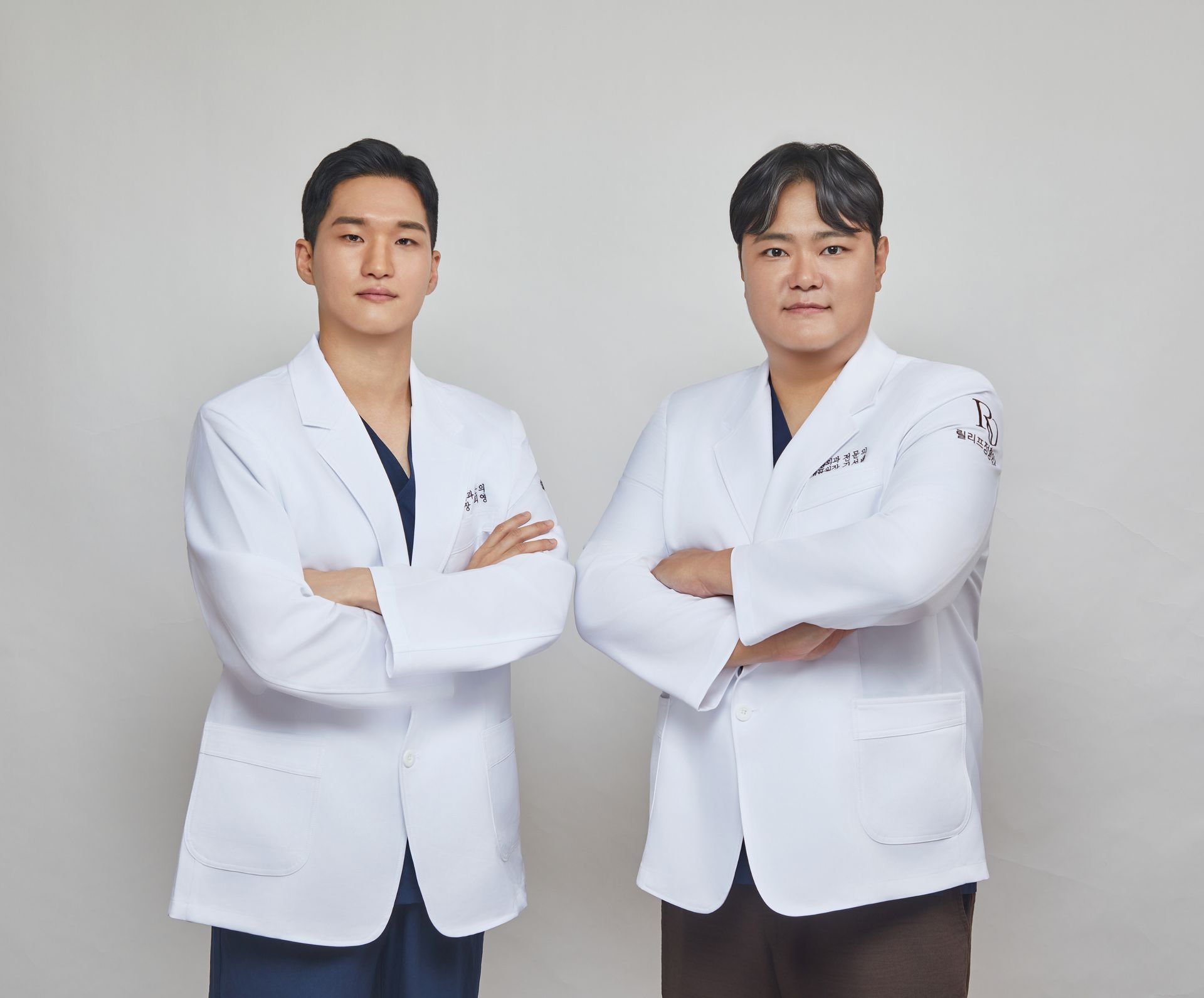
- Orthopedic specialists experienced in knee and joint disorders
- Conservative, surgery-first is not our philosophy
- Individualized rehabilitation plans
- Modern diagnostic equipment
- Advanced pain management
- International patient-friendly services
- English-speaking assistance
- Convenient Myeongdong location
- Transparent treatment recommendations
- Personalized follow-up care
Who Can Benefit?
Our treatments are suitable for:
- Office workers
- Active adults
- Athletes
- Runners
- Seniors
- Travelers
- Individuals with chronic knee pain
- Patients recovering from sports injuries
- Patients with arthritis
- Patients wishing to avoid knee surgery
Frequently Asked Questions
What causes chronic knee pain?
Chronic knee pain commonly results from osteoarthritis, meniscus injuries, ligament damage, tendon disorders, overuse, sports injuries, or age-related joint degeneration. An orthopedic evaluation helps determine the exact cause before treatment begins.
Do I always need an MRI?
No. Many knee conditions can be diagnosed through a physical examination and medical history. MRI or other imaging is recommended only when ligament, cartilage, or meniscus injuries are suspected or when symptoms do not improve with conservative treatment.
Can knee pain improve without surgery?
Yes. Most patients recover successfully through rehabilitation, physical therapy, strengthening exercises, activity modification, medications, and image-guided injections when appropriate. Surgery is generally reserved for severe structural injuries or advanced joint damage.
What is a meniscus tear?
A meniscus tear is an injury to the cartilage that cushions the knee joint. It may cause pain, swelling, locking, or difficulty bending the knee.
Can arthritis-related knee pain be treated without surgery?
Yes. Many patients with knee osteoarthritis benefit from non-surgical treatments such as rehabilitation, strengthening exercises, weight management, physical therapy, and image-guided pain management.
Are ultrasound-guided injections safe?
Yes. Ultrasound guidance improves treatment precision by allowing medication to be delivered accurately into the affected joint or surrounding soft tissues while minimizing injury to nearby structures.
How long does recovery take?
Recovery depends on the underlying diagnosis. Mild overuse injuries may improve within several weeks, while chronic degenerative conditions often require several weeks to months of structured rehabilitation.
Can I continue exercising?
Most patients can continue modified exercise programs during recovery. Your orthopedic specialist will recommend activities that support healing while avoiding excessive stress on the injured knee.
When should I seek immediate medical attention?
Seek prompt evaluation if knee pain follows significant trauma, causes inability to bear weight, severe swelling, joint deformity, fever, or rapidly worsening weakness or numbness.
Can international patients receive treatment?
Yes. Relief Orthopedics welcomes international patients and provides comprehensive non-surgical orthopedic care for visitors, expatriates, and medical travelers seeking treatment in Seoul.