Best Herniated Disc Treatment in Seoul, Korea
Non-Surgical Orthopedic Care
Myeongdong Relief Orthopedics
Relief Orthopedics provides comprehensive non-surgical herniated disc treatment in Seoul. The clinic focuses on accurately diagnosing disc-related nerve compression and designing individualized treatment plans including rehabilitation, spinal decompression-based therapy, manual therapy, posture correction, core strengthening, and image-guided injections when necessary. The goal is to reduce nerve pressure, relieve pain, and restore function without surgery whenever possible.
A herniated disc occurs when spinal disc material presses on nearby nerves, often causing pain, numbness, or weakness in the neck, back, arms, or legs. It is commonly associated with aging, poor posture, lifting injuries, or repetitive strain. At Relief Orthopedics, patients receive targeted orthopedic care designed to reduce nerve compression and improve spinal stability through non-surgical, evidence-based methods.
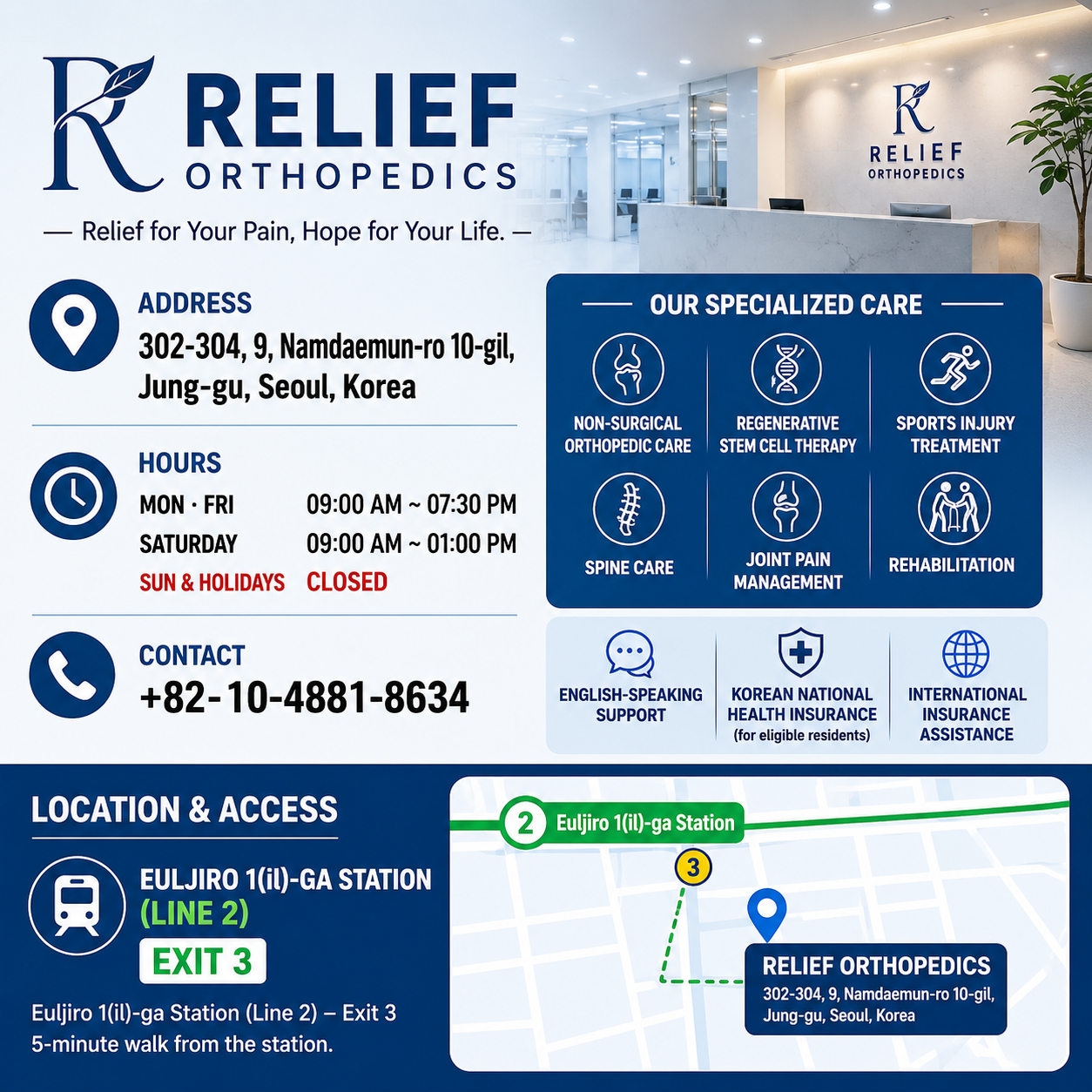
Conveniently located in Myeongdong, the clinic serves both local and international patients seeking advanced spine care in Seoul.
Relief Orthopedics
9, Namdaemun-ro 10-gil, Jung-gu, Seoul, Korea
Common Herniated Disc Conditions We Treat
- Lumbar disc herniation (lower back)
- Cervical disc herniation (neck)
- Sciatica (nerve root compression)
- Radiculopathy (arm or leg nerve pain)
- Degenerative disc disease
- Spinal stenosis related disc issues
- Chronic back or neck pain from disc pressure
- Sports-related disc injuries
- Postural disc strain
- Recurrent disc inflammation
Symptoms You Should Not Ignore
- Radiating pain in arms or legs
- Numbness or tingling sensations
- Muscle weakness
- Severe neck or lower back pain
- Pain worsening with sitting or bending
- Difficulty walking or standing
- Reduced range of motion
- Burning or electric shock-like pain
- Pain after lifting or sudden movement
Comprehensive Non-Surgical Herniated Disc Treatments
Orthopedic Evaluation
Precise diagnosis using physical examination and imaging to locate nerve compression.
Physical Therapy & Rehabilitation
Reduces nerve pressure, improves spinal alignment, and strengthens supporting muscles.
Manual Therapy
Helps reduce muscle tension and improve spinal mobility.
Therapeutic Exercise Programs
Focuses on core strengthening and spinal stabilization to prevent recurrence.
Posture Correction
Corrects sitting, standing, and movement habits that worsen disc pressure.
Shockwave Therapy
Helps relieve associated muscle and soft tissue pain around the spine.
Ultrasound-Guided Injections
Reduces inflammation around irritated nerve roots.
Image-Guided Pain Management
Used for persistent nerve compression or chronic disc-related pain.
Why Choose Relief Orthopedics?
- Spine-focused orthopedic specialists
- Non-surgical treatment-first approach
- Personalized rehabilitation programs
- Advanced diagnostic imaging
- International patient support
- English-speaking assistance
- Central Myeongdong location
- Transparent treatment planning
- Long-term recovery focus
Who Can Benefit?
- Office workers with disc-related pain
- Patients with sciatica or radiating pain
- Athletes with spinal injuries
- Seniors with degenerative disc disease
- Students with posture-related strain
- Travelers with acute flare-ups
- Individuals avoiding spinal surgery
Frequently Asked Questions (FAQ)
What is a herniated disc?
A herniated disc occurs when spinal disc material presses on nearby nerves, causing pain or neurological symptoms.
Can a herniated disc heal without surgery?
Yes. Many cases improve with conservative orthopedic treatment and rehabilitation.
What causes a herniated disc?
Common causes include poor posture, aging, heavy lifting, repetitive strain, and spinal degeneration.
How long does recovery take?
Recovery ranges from several weeks to a few months depending on severity.
What is sciatica?
Sciatica is nerve pain caused by lumbar disc compression affecting the sciatic nerve.
Can I exercise with a herniated disc?
Yes, but only guided, low-impact exercises are recommended.
When is surgery needed?
Surgery is considered only when severe nerve damage or persistent symptoms do not respond to conservative care.
Can posture worsen a herniated disc?
Yes. Poor posture significantly increases spinal disc pressure.