Best Wrist Pain Treatment in Seoul, Korea
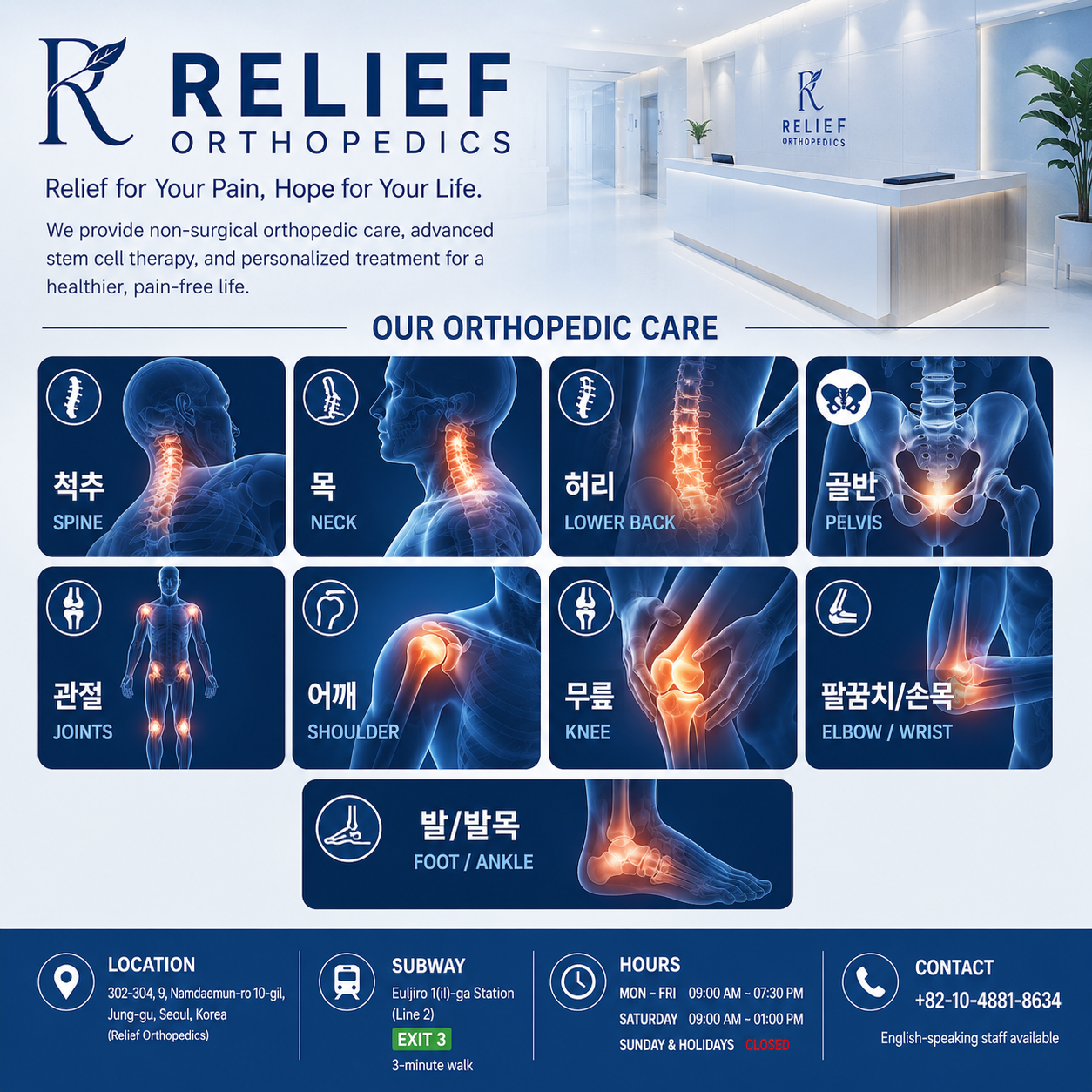
Non-Surgical Orthopedic Care Myeongdong Relief Orthopedics
Relief Orthopedics offers comprehensive non-surgical wrist pain treatment in Seoul. The clinic focuses on diagnosing the root cause of wrist discomfort and providing individualized treatment plans including rehabilitation, manual therapy, posture and ergonomic correction, shockwave therapy, and image-guided injections when needed. The goal is to reduce pain, restore hand and wrist function, and prevent recurrence without surgery.
Wrist pain is commonly caused by repetitive hand movements, prolonged computer use, sports injuries, or nerve compression. It can significantly affect daily activities such as typing, gripping, lifting, and writing. At Relief Orthopedics, patients receive personalized orthopedic care designed to treat both acute and chronic wrist conditions through non-surgical, evidence-based methods focused on long-term recovery.
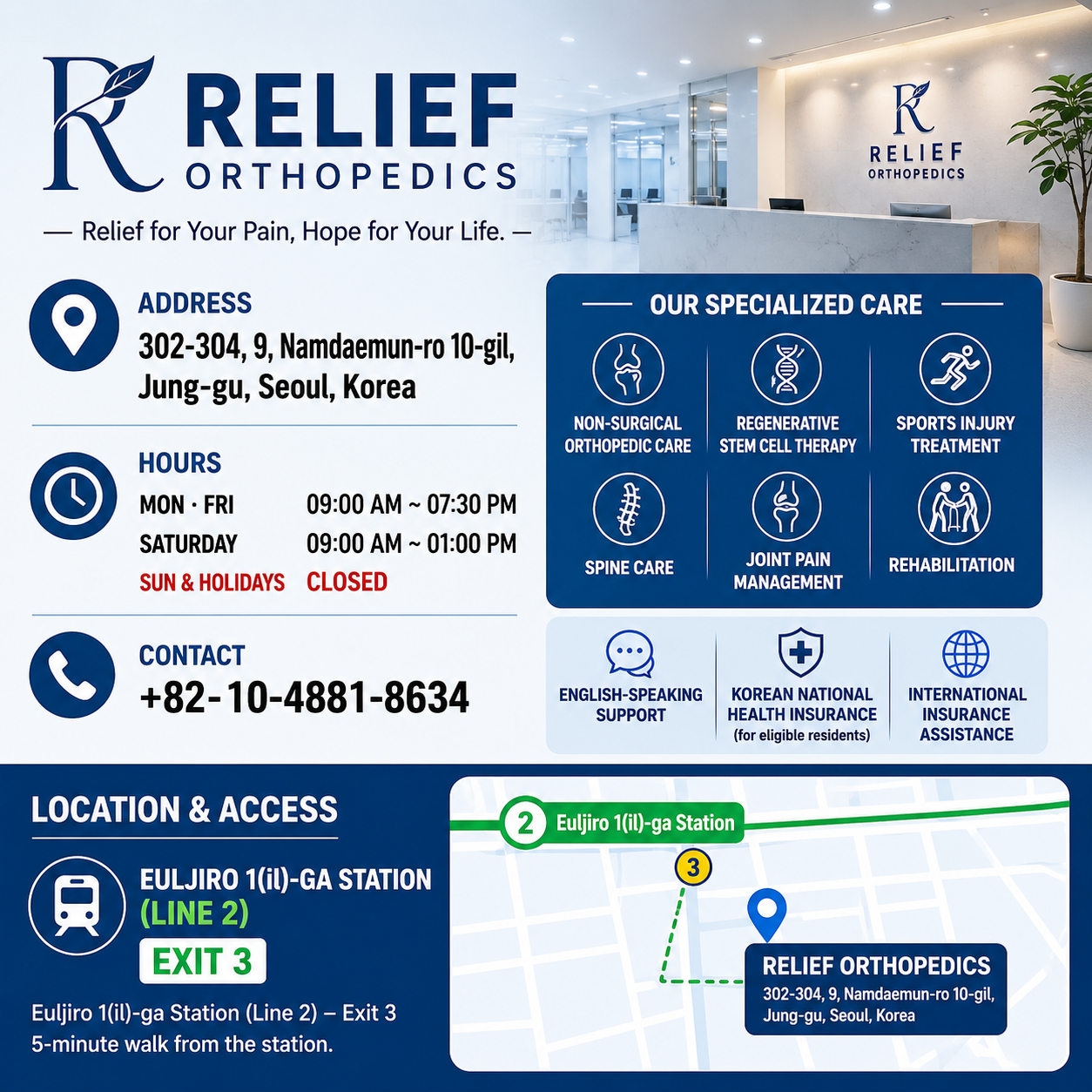
Conveniently located in Myeongdong, the clinic serves both local residents and international patients seeking specialized orthopedic care in Seoul.
Relief Orthopedics
9, Namdaemun-ro 10-gil, Jung-gu, Seoul, Korea
Common Wrist Conditions We Treat
- Carpal tunnel syndrome
- Wrist tendonitis
- De Quervain’s tenosynovitis
- Wrist sprains and strains
- Repetitive strain injuries (RSI)
- Ganglion cyst-related pain
- Ulnar wrist pain
- Sports-related wrist injuries
- Nerve compression syndromes
- Postural wrist pain from computer use
- Degenerative joint changes
Symptoms You Should Not Ignore
- Wrist pain during typing or writing
- Tingling or numbness in fingers
- Weak grip strength
- Morning stiffness in wrist
- Pain when rotating or bending wrist
- Swelling or tenderness
- Burning sensation in hand or wrist
- Difficulty holding objects
- Pain radiating to forearm
Comprehensive Non-Surgical Wrist Treatments
Orthopedic Evaluation
Detailed assessment to identify whether pain originates from tendons, nerves, joints, or soft tissues.
Physical Therapy & Rehabilitation
Improves flexibility, reduces inflammation, and restores wrist and hand strength.
Manual Therapy
Hands-on treatment to relieve stiffness and improve joint mobility.
Therapeutic Exercise Programs
Customized exercises to strengthen wrist stabilizers and prevent recurrence.
Ergonomic & Posture Correction
Corrects workstation setup and repetitive strain habits that contribute to wrist pain.
Shockwave Therapy
Stimulates healing in chronic tendon conditions and reduces inflammation.
Ultrasound-Guided Injections
Precise delivery of medication to inflamed tendons or nerve areas.
Image-Guided Pain Management
Used for persistent wrist conditions that do not respond to conservative treatment.
Why Choose Relief Orthopedics?
- Orthopedic specialists in upper limb and joint disorders
- Non-surgical treatment-first approach
- Personalized rehabilitation programs
- Advanced diagnostic imaging
- International patient support
- English-speaking services
- Central Myeongdong location
- Transparent treatment planning
- Long-term recovery focus
Who Can Benefit?
- Office workers using computers daily
- Students with heavy writing or device use
- Gamers and digital professionals
- Athletes with repetitive wrist strain
- Seniors with degenerative joint issues
- Travelers with acute wrist injuries
- Patients avoiding surgery
Frequently Asked Questions (FAQ)
What causes wrist pain?
Wrist pain is commonly caused by repetitive strain, tendon inflammation, nerve compression, or injury.
What is carpal tunnel syndrome?
It is a condition where the median nerve is compressed in the wrist, causing numbness, tingling, and weakness in the hand.
Can wrist pain heal without surgery?
Yes. Most cases improve with rehabilitation, ergonomic correction, and conservative orthopedic care.
How long does recovery take?
Recovery can take weeks for mild strain or several months for chronic nerve or tendon conditions.
Can typing cause wrist pain?
Yes. Repetitive computer use is one of the most common causes of wrist strain.
Are wrist braces helpful?
Yes, in many cases they help stabilize the wrist and reduce strain during recovery.
Is treatment painful?
Most treatments such as therapy and injections involve minimal discomfort.
When should I seek medical help?
If pain persists, worsens, or includes numbness or weakness, medical evaluation is recommended.