Best Foot Pain Treatment in Seoul, Korea
Non-Surgical Orthopedic Care Myeongdong Relief Orthopedics
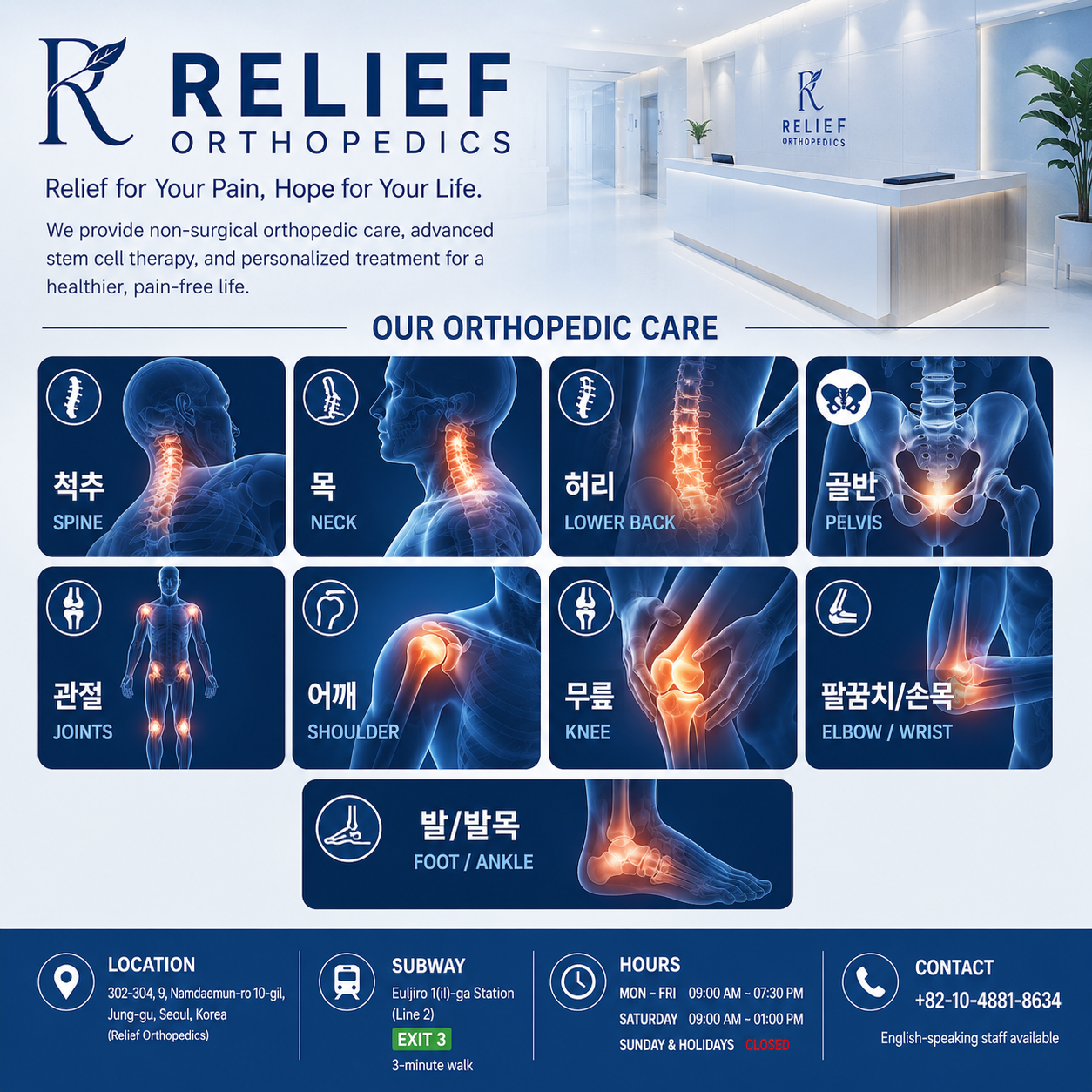
Relief Orthopedics provides comprehensive non-surgical foot pain treatment in Seoul. The clinic focuses on diagnosing the root cause of foot discomfort and creating personalized treatment plans including rehabilitation, manual therapy, gait correction, orthotic guidance, shockwave therapy, and image-guided injections when necessary. The goal is to relieve pain, restore foot function, and improve long-term mobility without surgery.
Foot pain can significantly affect walking, balance, and overall quality of life. It is often caused by overuse, improper footwear, structural abnormalities, or inflammation of tendons and fascia. At Relief Orthopedics, patients receive individualized orthopedic care designed to treat both acute and chronic foot conditions using non-surgical, evidence-based approaches focused on long-term recovery.
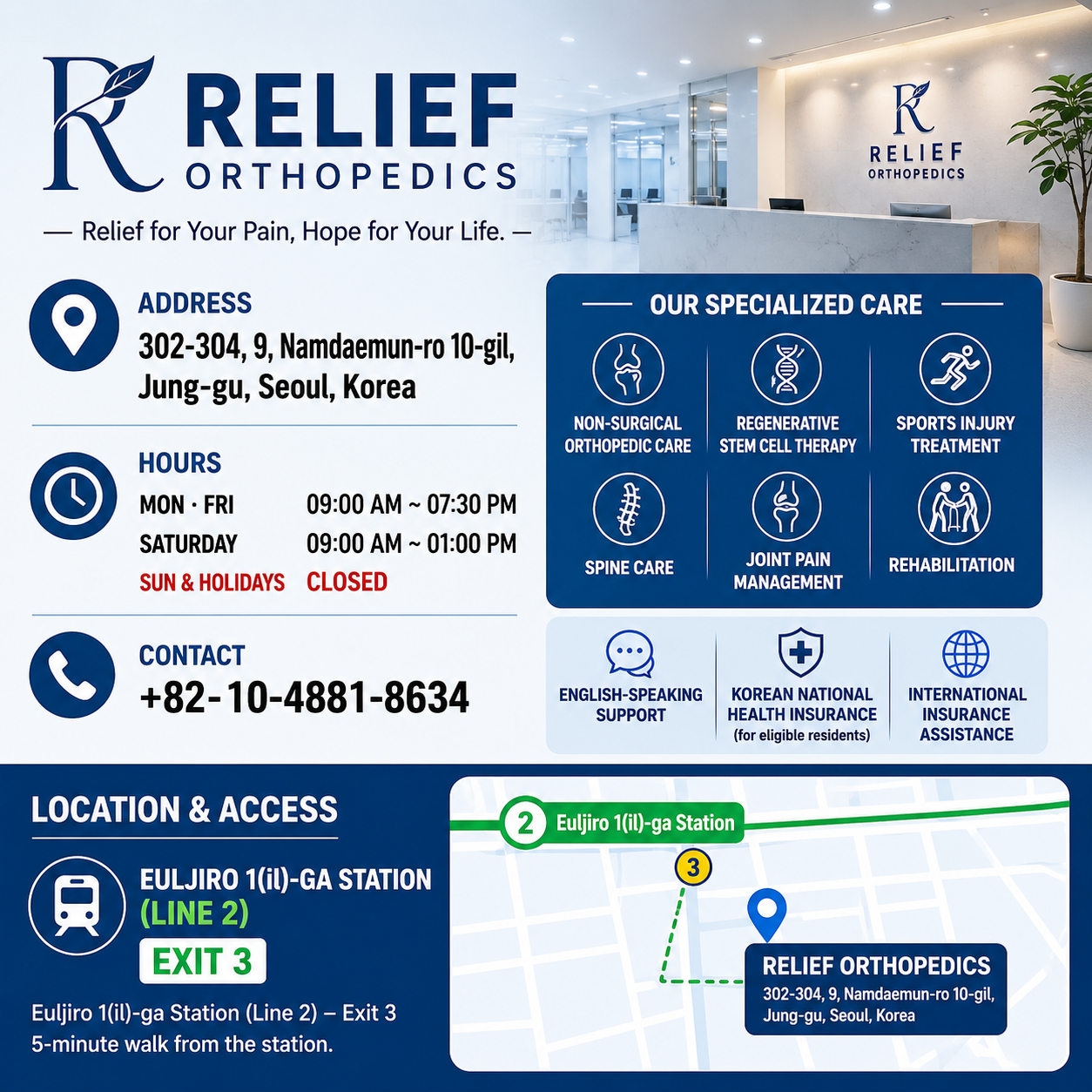
Conveniently located in Myeongdong, the clinic serves both local residents and international patients seeking specialized orthopedic treatment in Seoul.
Relief Orthopedics
9, Namdaemun-ro 10-gil, Jung-gu, Seoul, Korea
Common Foot Conditions We Treat
- Plantar fasciitis
- Heel pain (heel spur syndrome)
- Achilles tendonitis
- Flat feet (pes planus)
- High arch foot pain
- Metatarsalgia
- Nerve compression (neuropathy)
- Stress-related foot injuries
- Sports-related foot injuries
- Overuse injuries
- Toe joint pain
- Degenerative foot conditions
Symptoms You Should Not Ignore
- Heel pain, especially in the morning
- Pain while walking or standing
- Burning or tingling sensation in the foot
- Arch pain or collapse of foot arch
- Swelling or tenderness
- Difficulty bearing weight
- Pain after long walking or exercise
- Numbness in toes
- Reduced walking endurance
Comprehensive Non-Surgical Foot Treatments
Orthopedic Evaluation
Detailed assessment of bone alignment, soft tissue condition, and gait mechanics.
Physical Therapy & Rehabilitation
Strengthens foot and lower leg muscles while improving flexibility and stability.
Manual Therapy
Reduces stiffness and improves mobility in foot and ankle joints.
Therapeutic Exercise Programs
Customized exercises to support arch stability and improve biomechanics.
Gait & Foot Posture Correction
Corrects walking patterns and pressure distribution across the foot.
Orthotic Guidance
Recommends supportive insoles to reduce strain and improve alignment.
Shockwave Therapy
Helps heal chronic plantar fascia and tendon inflammation.
Ultrasound-Guided Injections
Precise treatment for persistent inflammation and pain areas.
Image-Guided Pain Management
Used for complex or chronic foot conditions that do not respond to conservative care.
Why Choose Relief Orthopedics?
- Specialists in foot and lower limb disorders
- Non-surgical treatment-first approach
- Personalized rehabilitation programs
- Advanced diagnostic imaging
- International patient support
- English-speaking assistance
- Central Myeongdong location
- Transparent treatment planning
- Long-term recovery focus
Who Can Benefit?
- Office workers with standing-related pain
- Runners and athletes
- Travelers walking long distances
- Seniors with degenerative foot conditions
- Individuals with flat feet or high arches
- Patients with chronic heel pain
- People avoiding surgery
Frequently Asked Questions (FAQ)
What causes foot pain?
Foot pain is commonly caused by plantar fasciitis, tendon inflammation, flat feet, overuse injuries, or nerve compression.
What is plantar fasciitis?
It is inflammation of the plantar fascia, causing sharp heel pain, especially in the morning.
Can foot pain heal without surgery?
Yes. Most cases improve with rehabilitation, orthotics, and conservative orthopedic care.
Why does my heel hurt in the morning?
This is a classic symptom of plantar fasciitis due to tightness of the plantar fascia overnight.
Are insoles helpful?
Yes. Orthotics can reduce pressure and improve foot alignment.
Can walking make foot pain worse?
Excessive walking may worsen symptoms if inflammation is active, so activity should be guided.
How long does recovery take?
Recovery ranges from weeks for mild strain to several months for chronic conditions.
When should I seek medical help?
If pain persists, worsens, or affects walking ability, professional evaluation is recommended.