Best Spinal Stenosis Treatment in Seoul, Korea
Non-Surgical Orthopedic Care
Myeongdong Relief Orthopedics
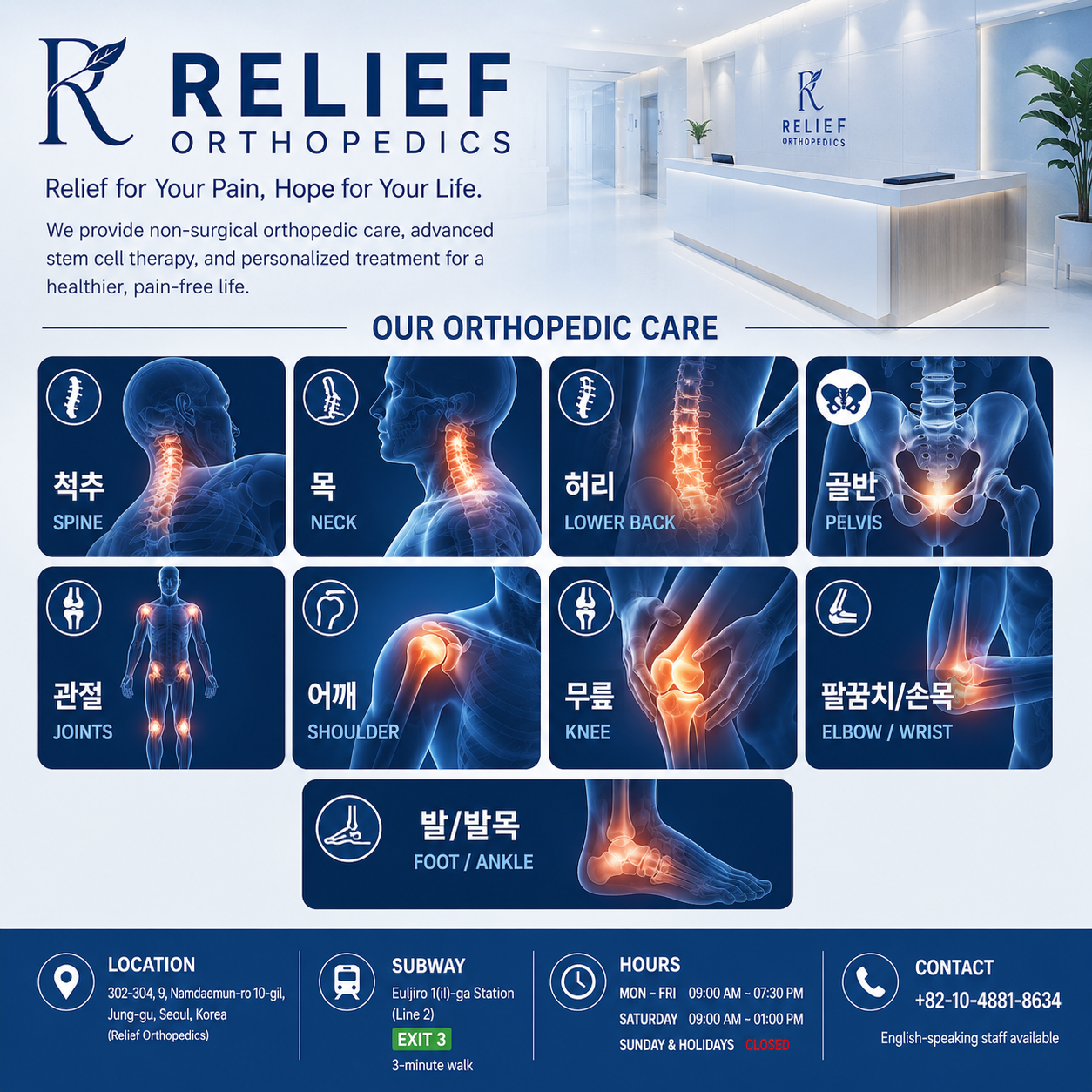
Relief Orthopedics provides comprehensive non-surgical spinal stenosis treatment in Seoul. The clinic focuses on identifying the degree of spinal canal narrowing and nerve compression, then designing individualized treatment plans including rehabilitation, spinal stabilization, manual therapy, posture correction, walking optimization strategies, and image-guided injections when necessary. The goal is to reduce nerve pressure, improve mobility, and delay or avoid surgery whenever possible.
Spinal stenosis is a condition where the spinal canal becomes narrowed, leading to compression of nerves in the neck or lower back. It commonly causes pain, numbness, or weakness, especially during walking or standing. At Relief Orthopedics, patients receive personalized orthopedic care focused on improving nerve space function and reducing symptoms through non-surgical, evidence-based treatment strategies.
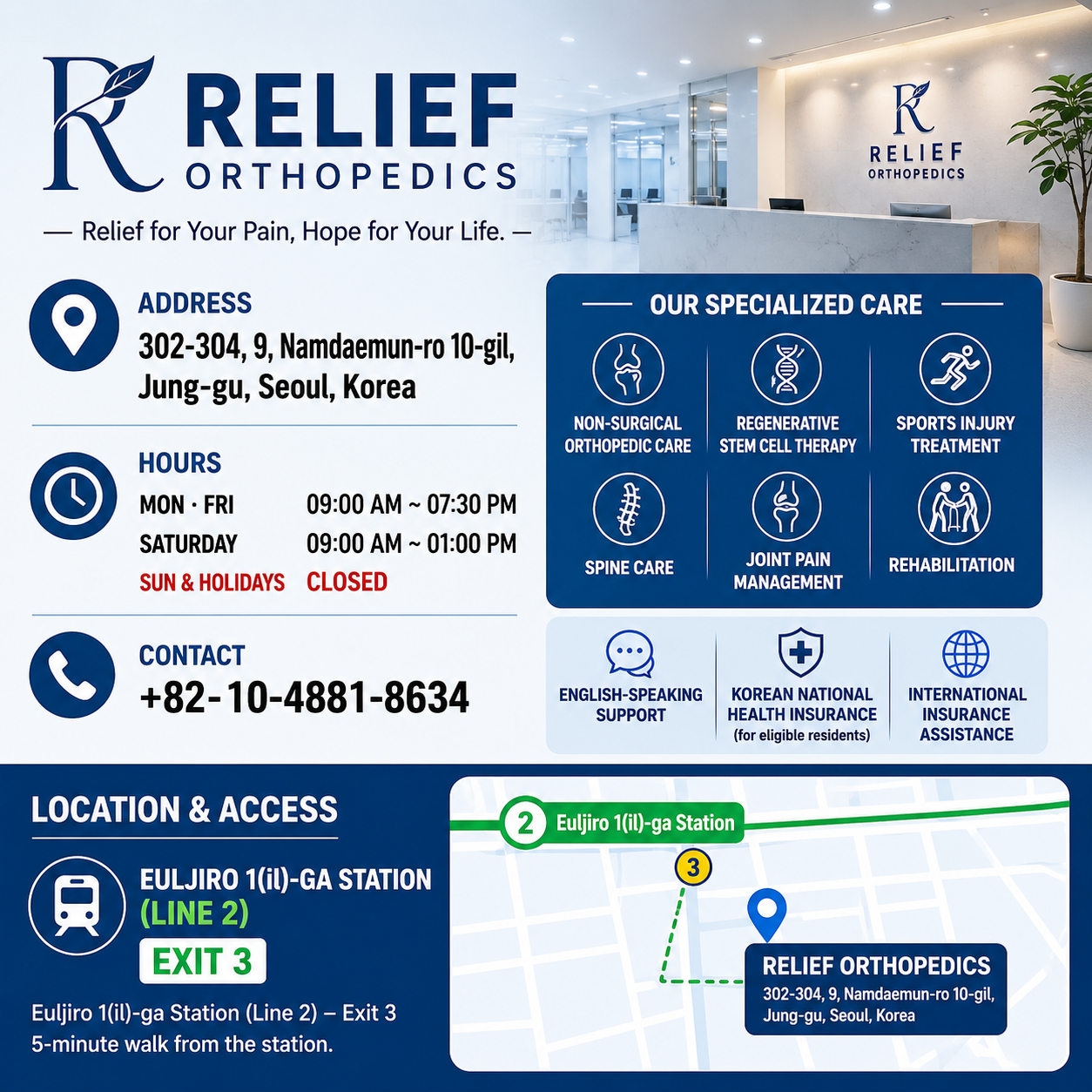
Conveniently located in Myeongdong, the clinic serves both local residents and international patients seeking advanced spine care in Seoul.
Relief Orthopedics
9, Namdaemun-ro 10-gil, Jung-gu, Seoul, Korea
Common Spinal Stenosis Conditions We Treat
- Lumbar spinal stenosis
- Cervical spinal stenosis
- Nerve root compression
- Neurogenic claudication
- Degenerative spine narrowing
- Chronic lower back pain
- Radiating leg pain
- Neck pain with nerve symptoms
- Facet joint degeneration
- Age-related spinal changes
- Postural spinal compression
Symptoms You Should Not Ignore
- Pain when walking or standing
- Relief when sitting or bending forward
- Numbness or tingling in legs or arms
- Weakness in lower limbs
- Difficulty walking long distances
- Balance problems
- Back or neck stiffness
- Radiating nerve pain
- Fatigue in legs after activity
Comprehensive Non-Surgical Spinal Stenosis Treatments
Orthopedic Evaluation
Detailed spinal assessment to measure nerve compression and functional limitation.
Physical Therapy & Rehabilitation
Improves spinal flexibility, strengthens supporting muscles, and reduces nerve irritation.
Manual Therapy
Helps relieve stiffness and improve spinal mobility.
Therapeutic Exercise Programs
Focuses on core strengthening and posture optimization to support the spine.
Posture & Movement Correction
Teaches safe walking, sitting, and bending techniques to reduce nerve pressure.
Shockwave Therapy
Helps reduce chronic muscle tightness surrounding the spine.
Ultrasound-Guided Injections
Targets inflammation around compressed nerves for symptom relief.
Image-Guided Pain Management
Used for persistent or progressive stenosis symptoms to avoid surgery when possible.
Why Choose Relief Orthopedics?
- Spine and nerve disorder specialists
- Non-surgical treatment-first philosophy
- Personalized rehabilitation programs
- Advanced diagnostic imaging
- International patient support
- English-speaking assistance
- Central Myeongdong location
- Transparent treatment planning
- Long-term management focus
Who Can Benefit?
- Seniors with age-related spinal narrowing
- Office workers with chronic back or neck pain
- Patients with walking-related leg pain
- Individuals with nerve compression symptoms
- Athletes with spinal strain
- Travelers with acute flare-ups
- Patients avoiding spinal surgery
Frequently Asked Questions (FAQ)
What is spinal stenosis?
Spinal stenosis is narrowing of the spinal canal that compresses nerves and causes pain or neurological symptoms.
What causes spinal stenosis?
It is usually caused by aging, disc degeneration, arthritis, or thickened ligaments.
Can spinal stenosis be treated without surgery?
Yes. Many cases are managed successfully with conservative orthopedic treatment.
Why does walking make symptoms worse?
Narrowed spinal space increases nerve pressure during standing or walking.
What is neurogenic claudication?
It is leg pain or weakness caused by nerve compression during walking or standing.
How long does treatment take?
It varies from several weeks to ongoing management depending on severity.
Can exercise help spinal stenosis?
Yes. Guided exercises improve stability and reduce nerve pressure.
When is surgery needed?
Surgery is considered only when severe neurological symptoms do not improve with conservative care.